There is a short window every summer — a few fleeting weeks in July — when Rainier cherries appear at Ontario markets. Golden skin with a rosy blush, translucent flesh, stems still green and curling. They are almost too pretty to eat. So before eating them, I photographed them.
This session turned into a small study: the same handful of cherries, three completely different images. I want to walk you through them, because together they show something I keep coming back to in still life photography — you are never really photographing the subject. You are photographing the light around it.
One: The Bowl
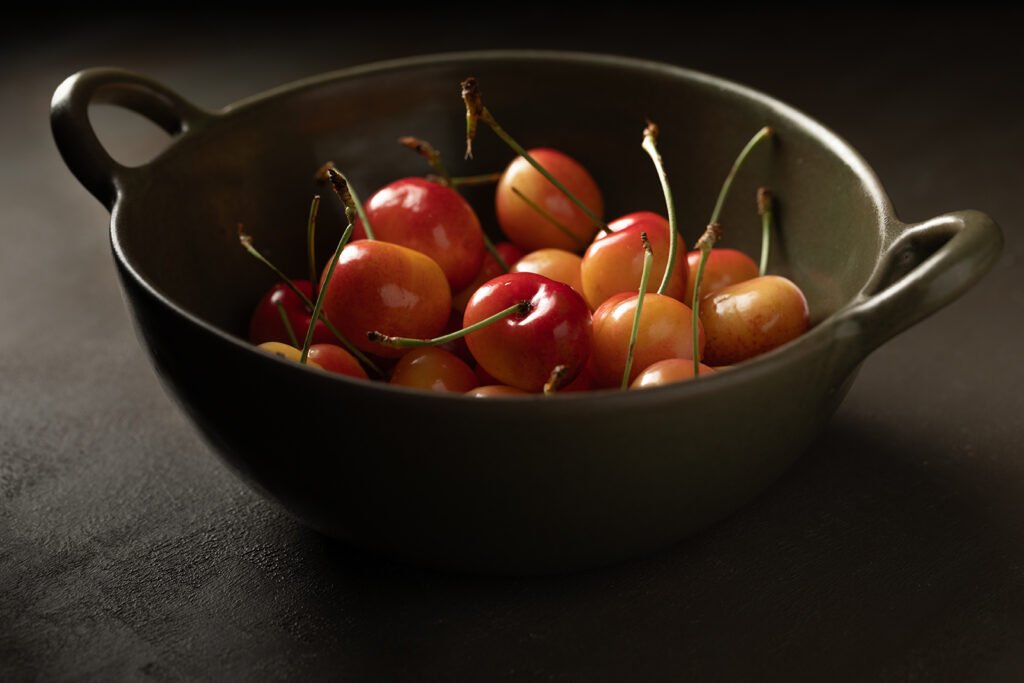
The first image is the classic dark still life. A stoneware bowl with rustic handles, a deep charcoal background, and the cherries piled inside with their stems reaching in every direction — a little chaotic, a little alive.
I lit this with a single strobe fitted with a honeycomb grid, feathered from the side. The grid keeps the light from spilling everywhere, so the background falls into shadow while the cherries catch just enough to glow. That is the heart of chiaroscuro: it is not about darkness. It is about deciding exactly where the light is allowed to go.
The green stems do a lot of quiet work here. Against all those warm reds and ambers, they add movement and a touch of wildness. I never trim them.
Two: The Pair
The second image is the opposite of the first — two cherries, nothing else, on a dark textured surface.
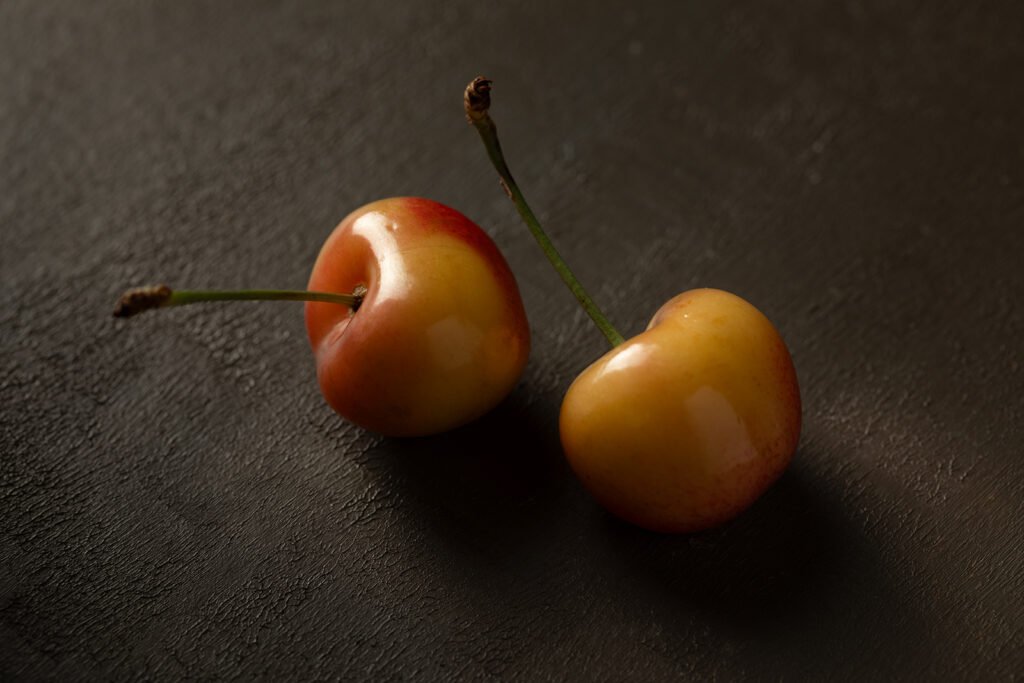
Minimalism is harder than abundance. When there are twenty cherries in a bowl, the eye forgives small flaws. When there are two, every highlight, every shadow edge, every millimetre of placement matters. I moved these two cherries around for longer than I would like to admit, watching how their stems crossed and how the light wrapped around each curve.
This kind of composition owes everything to the Dutch Golden Age painters I love — especially Adriaen Coorte, who painted small clusters of fruit on dark ledges with almost devotional attention. Three hundred years later, that idea still holds: give one humble subject all of your attention, and it becomes monumental.
Adriaen Coorte → 🔗 Rijksmuseum
Three: The Sheet Music
The third image breaks the rules of the first two. Instead of soft, controlled strobe light, this one uses hard directional light falling across vintage sheet music, with the cherries scattered on top — deep shadows, bright highlights, and the shadow of a lace curtain playing across the page.
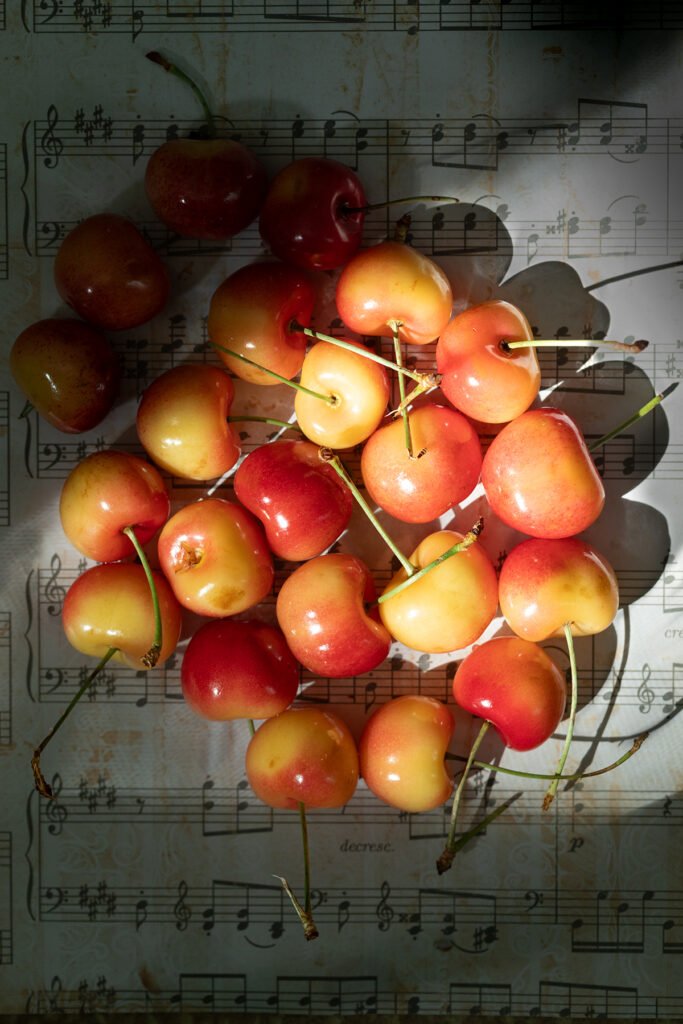
Hard light is unforgiving, and that is exactly why I wanted it. It turns the cherries into small glossy sculptures and gives the whole scene a nostalgic, sun-through-the-window feeling — like fruit left on a piano in an old summer house. The music score adds texture and story without competing for attention, because its tones stay quiet under the shadows.
Same cherries. Same afternoon. Three entirely different moods.
Why Shoot One Subject Three Ways
If you are building a food photography portfolio — or just learning to see light — I can’t recommend this exercise enough. Take one simple, beautiful subject and force yourself to photograph it three different ways: one abundant, one minimal, one experimental. You will learn more from that single session than from ten sessions where you only take the obvious shot.
And then, of course, eat the cherries. Rainier season doesn’t wait.
Bonus: Honey-Roasted Rainier Cherries
Well — almost empty. A handful of cherries survived the shoot, and they went straight into the oven. This is the simplest way I know to turn fresh cherries into something that feels special: roasting concentrates their sweetness and the honey glaze makes them glow like they are still under the studio light.
Ingredients (serves 2):
- 2 cups Rainier cherries, pitted (or left whole with stems for serving — just warn your guests)
- 1 tablespoon honey
- 1 teaspoon fresh lemon juice
- 1/2 teaspoon vanilla extract
- A small pinch of salt
- Fresh thyme sprig (optional, but lovely)
Method:
- Preheat the oven to 400°F (200°C).
- Toss the cherries with honey, lemon juice, vanilla, and salt in a small baking dish — a ceramic one works beautifully and goes straight from oven to table.
- Tuck in the thyme sprig if using.
- Roast for 12–15 minutes, until the cherries are soft, glossy, and just beginning to release their juices. Shake the dish once halfway through.
- Rest for 5 minutes before serving — the juices thicken into a light syrup as they cool.
Serve warm over vanilla ice cream, thick yogurt, or a slice of toasted brioche. The roasted cherries also keep in the fridge for up to three days, and a spoonful stirred into morning oatmeal is a quiet luxury.
In Ukrainian, we have two different words for cherries — and they are two different fruits entirely. Chereshnia is the sweet cherry, like these Rainiers: firm, honeyed, eaten fresh by the handful in early summer. Vyshnia is the sour cherry — darker, tarter, and the only one that belongs inside vareniki or in my grandmother’s summer compote. No Ukrainian cook would ever fill vareniki with sweet cherries; without that sour edge, the filling falls flat. So these Rainiers got the treatment sweet cherries deserve: eaten fresh, photographed, and the last survivors roasted with honey.
Shot with a Canon body and 100mm macro lens, single strobe with honeycomb grid (images 1–2) and natural hard light (image 3). Edited in Lightroom Classic and Photoshop.
More moody food stories on the PineTreeCa blog — and if these cherries belong on your wall, visit my Frame TV Art collection.