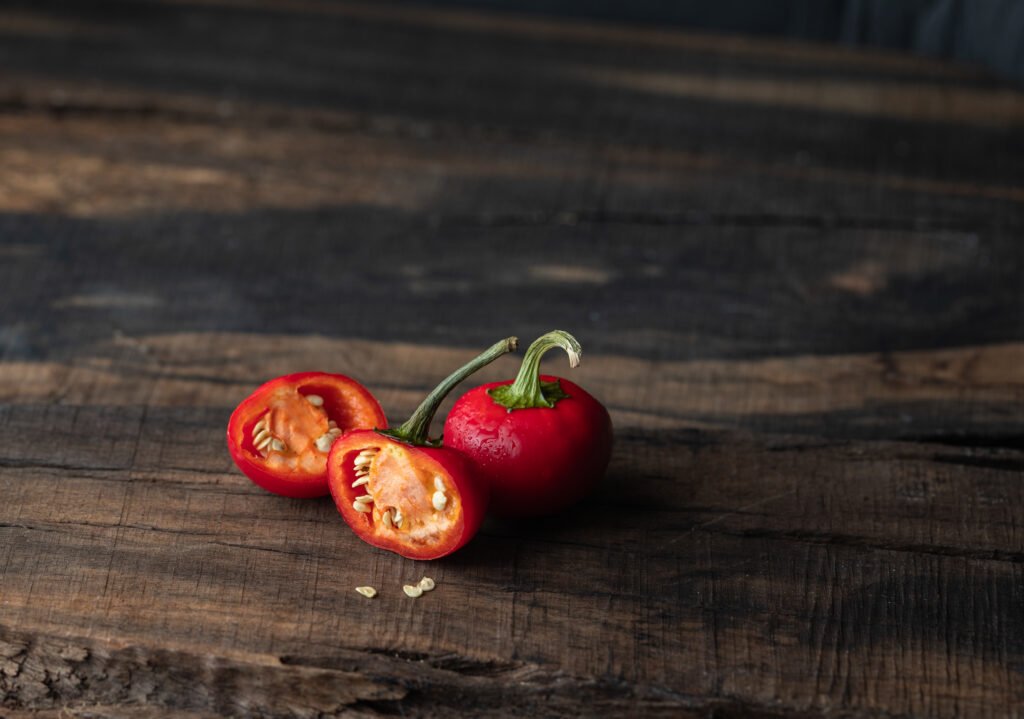
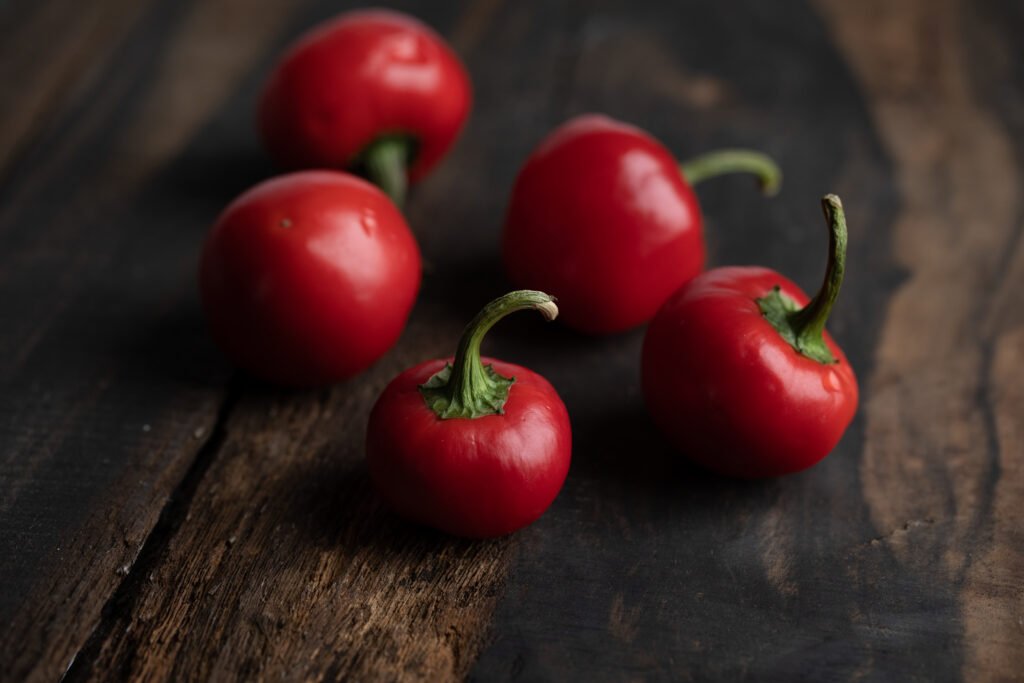
There is a moment just before you slice into a red cherry pepper. It looks less like an ingredient and more like a little lacquered ornament — round, glossy, deep scarlet, with a curl of green stem that refuses to sit still. I photographed these on a piece of weathered, almost-black wood. Even in the low, moody light, they seemed to glow from the inside. That is the quiet magic of this pepper: humble produce that behaves like a gemstone.
And chances are, you already know it. Maybe you picked one off an antipasto platter, or fished a pickled one out of a jar at a salad bar. Either way, you know the red cherry pepper — even if you never knew its name.
What exactly is a red cherry pepper?
The red cherry pepper is a small, round variety of Capsicum annuum. That is the same wide-ranging chili family that gives us bell peppers, jalapeños, and cayenne. It earns its name honestly, too. The pepper is roughly the size and shape of a cherry, with thick, firm walls and a glossy crimson skin. You may also see it sold as a Hungarian cherry pepper, a cherry bomb, or a sweet cherry pepper. The label usually depends on where it was grown and how hot it turned out.
And heat is where things get interesting. In fact, there are two camps. The sweet cherry peppers sit low on the Scoville scale — somewhere between about 100 and 3,500 units. They lean fruity and mild. The hot ones, however, climb to roughly 2,500 to 5,000 units. That puts the cherry bomb in the same neighbourhood as a jalapeño.
Here is the catch, though. The two types are nearly impossible to tell apart by sight. Even peppers from the same plant can vary with sun, soil, and season. So biting into one is always a small, delicious gamble. What stays constant, meanwhile, is the texture: crisp, juicy, thick-fleshed, with a sweet-tart edge underneath the warmth.
What to do with them in the kitchen
Those sturdy walls are the whole point. Because of them, the red cherry pepper is one of the best peppers there is for stuffing and pickling — the two things it is most loved for.
- Stuffed: Hollow them out and fill with soft cheeses, such as goat cheese, herby ricotta, or feta. You can also use prosciutto and a little provolone. Then bake them, or marinate them in good olive oil. For this reason, they are a staple of Mediterranean and Italian antipasto tables.
- Pickled: Their firm skin drinks up a vinegar brine beautifully. Pickling also tames the heat into something gentler and brighter. As a result, pickled cherry peppers belong on charcuterie boards, tucked into sandwiches, or scattered over pizza.
- Beyond the jar: Roast and peel them for a sweet, smoky relish. Alternatively, blend them into salsa or hot sauce, or cook them down into a pepper jelly. Sliced raw, they also add colour and a clean bite to salads and grain bowls.
They pair naturally with cured meats, olives, capers, anchovies, tomatoes, garlic, and fresh basil — the whole sun-warmed Mediterranean pantry. If you find fresh ones at a farmers’ market in late summer, store them unwashed in the fridge. Then use them within a week or two.
A photographer’s note
Honestly, I am as drawn to this pepper for its looks as for its flavour. Cut one open, and the interior is a small piece of theatre. A pale cluster of seeds sits against ribbed, apricot-coloured flesh, framed by that thick red wall. Against a dark surface and a single soft light, it becomes a study in contrast. The red is deep enough to hold its richness even in shadow. So it is the kind of subject that rewards patience and a little chiaroscuro.
That, really, is the through-line of how I cook and how I shoot. I start with ordinary, honest ingredients. Then I photograph and serve them in a way that lets them feel like something more.
The photograph in this post is available to license as a stock image. You can view and download it here:
License this red cherry pepper photo on my Stock
Looking for more food and lifestyle imagery in this dark, moody style? Browse the full PineTreeCa portfolio, or get in touch about custom food photography.